
PRIZE FOR EMBROIDERY 2026
1st place winner — open fashion category
a clear light abideth upon men
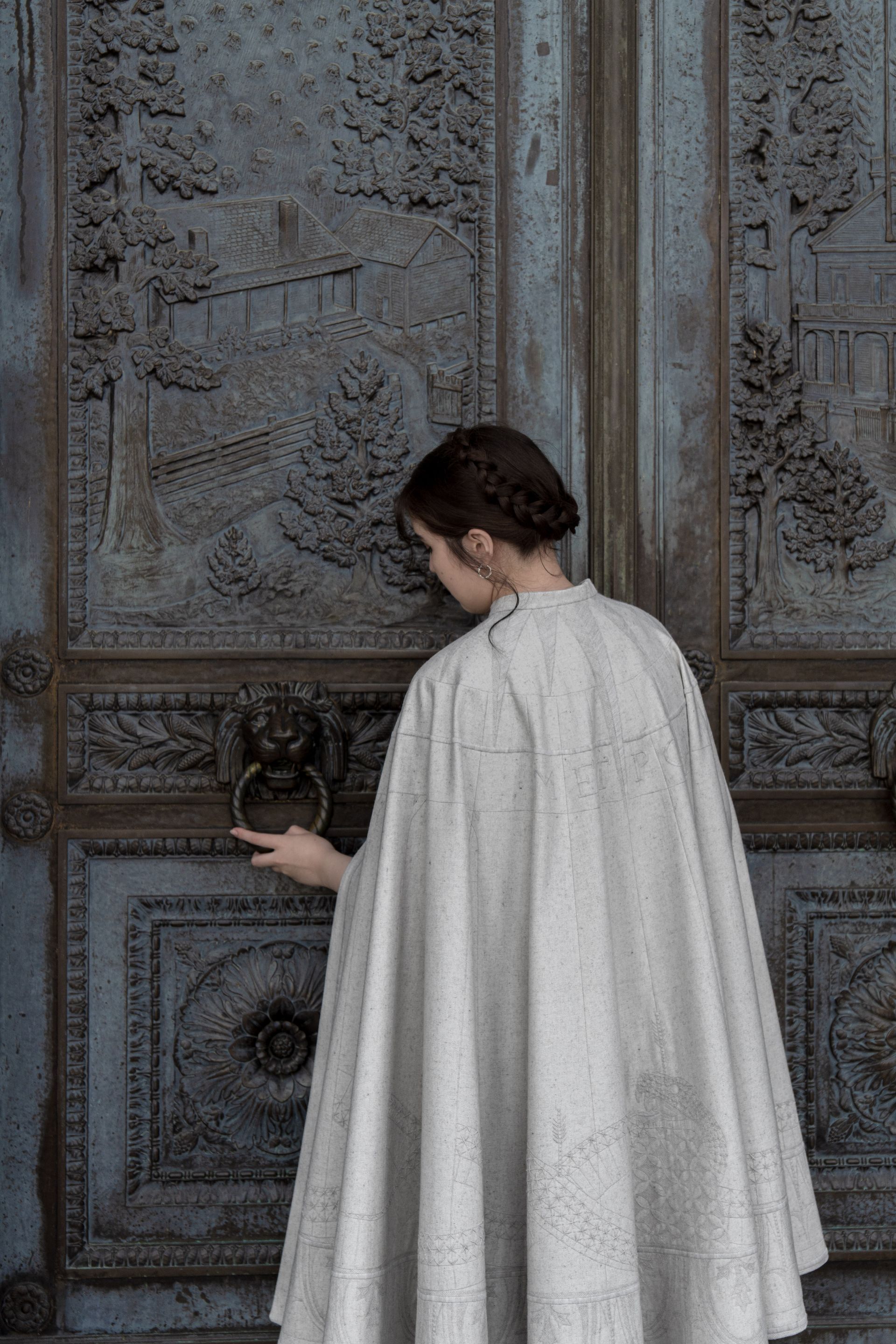
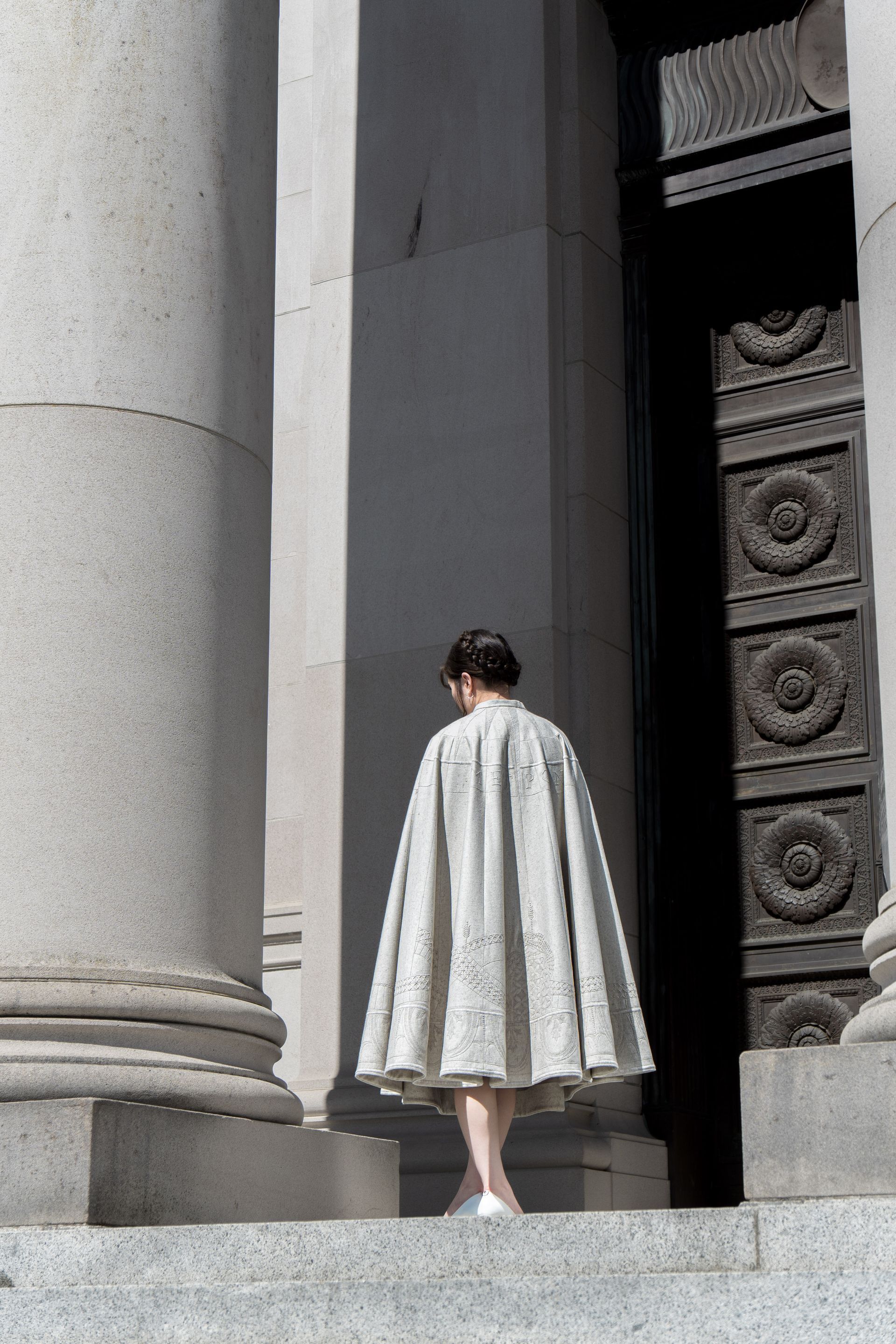
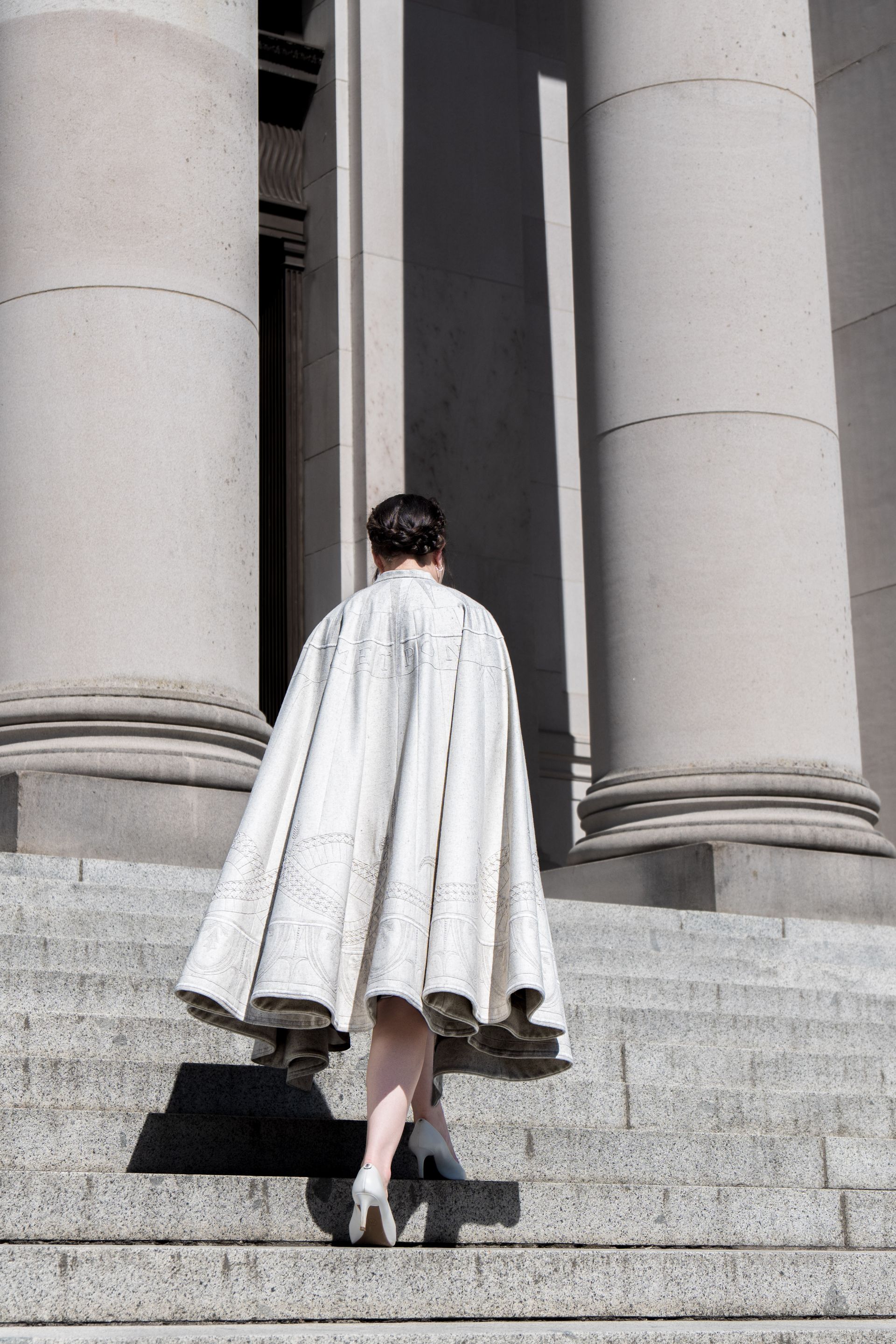
The piece illustrates Apollo’s slaying of the Python as the primary western Ur-narrative of the light logos conquering the dark; this logic is embedded not only on the garment’s surface, but in its structure, with seams forming a sundial calibrated to Delphi. The tonal padded satin stitch, bullion knots, and whipped backstitch, much like architectural bas relief, communicate through light and shadow rather than colour.
The vertical composition reads as an ascent from the chthonic to the solar; the lower register carries the egg-and-dart apeiron, the Python coiling upon the omphalos stone. Through the middle, rows of tree-columns following classical Doric proportions illustrate the sacred grove becoming temple. The upper register is the aether, the Python pierced by the arrows not of a profane archer, but Apollo as the solar principle itself; upon the entablature is inscribed the Greek μέτρον/ΜΕΤΡΟΝ (‘measure’), a word carrying the same dual sense as in English— both the measurement of time and space (and Apollo as the geometrician god), and the restraint of proportion, the Delphic ‘nothing in excess.’ Framing the solar motif, it recalls Plato’s identification of the sun with the Good, through which all things become intelligible.
The title of the work is drawn from the closing lines of Pindar’s Pythian Ode VIII:
Things of a day—what are we, and what not? Man is a dream of shadows.
Nevertheless when a glory from god hath shined on them, a clear light abideth upon men, and serene life.
Photography by Joshua Demian. The official page for the prize can be found here.

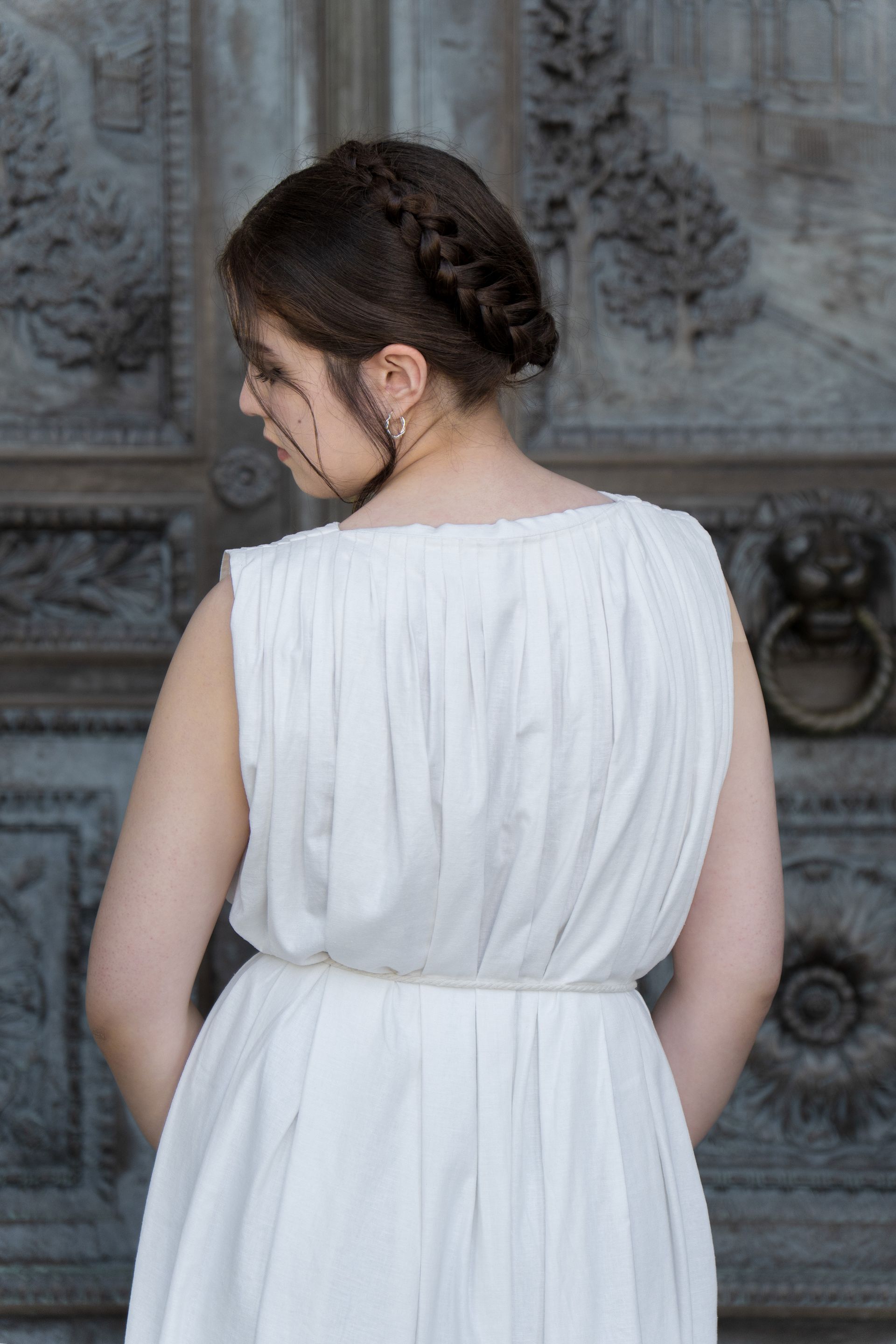

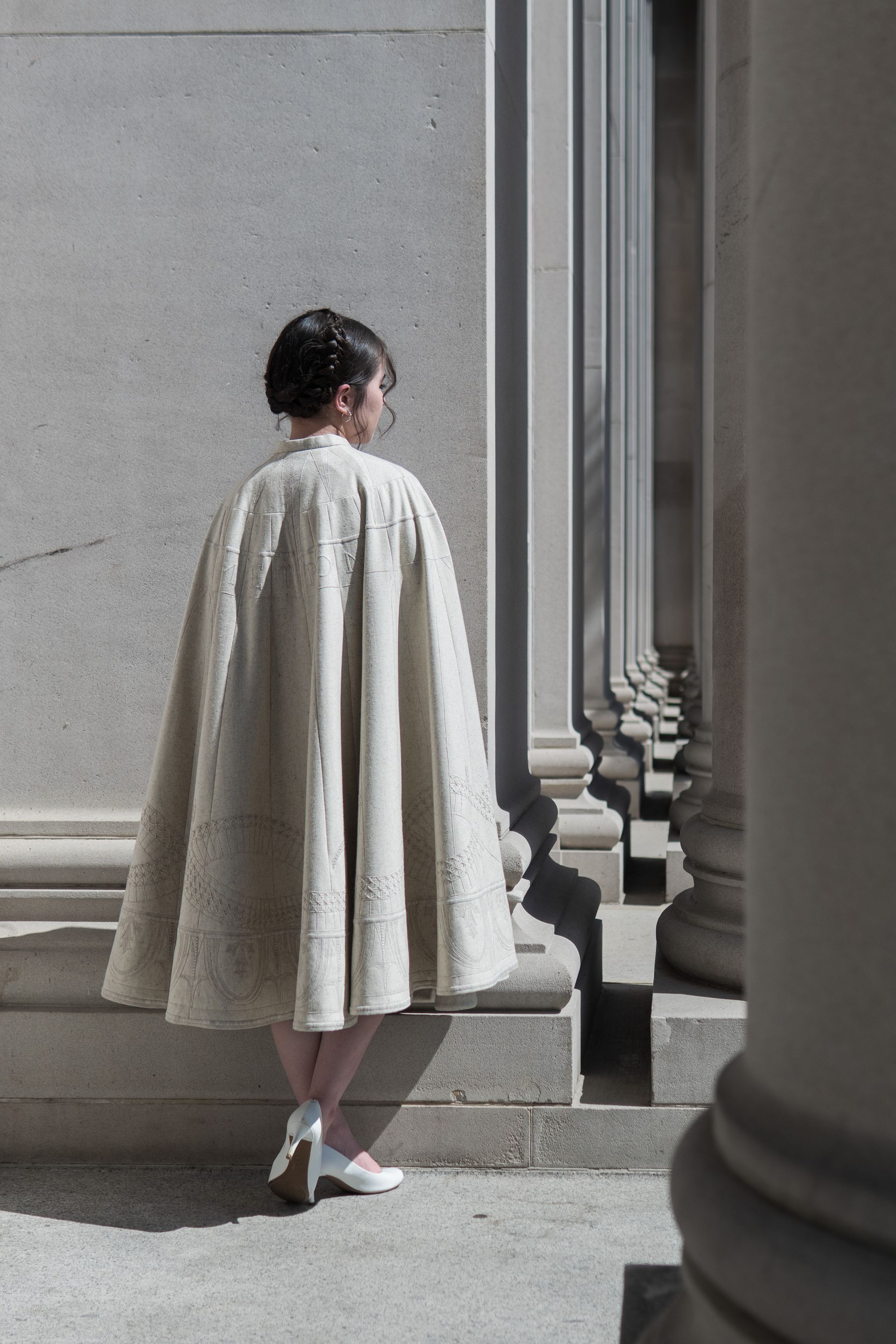
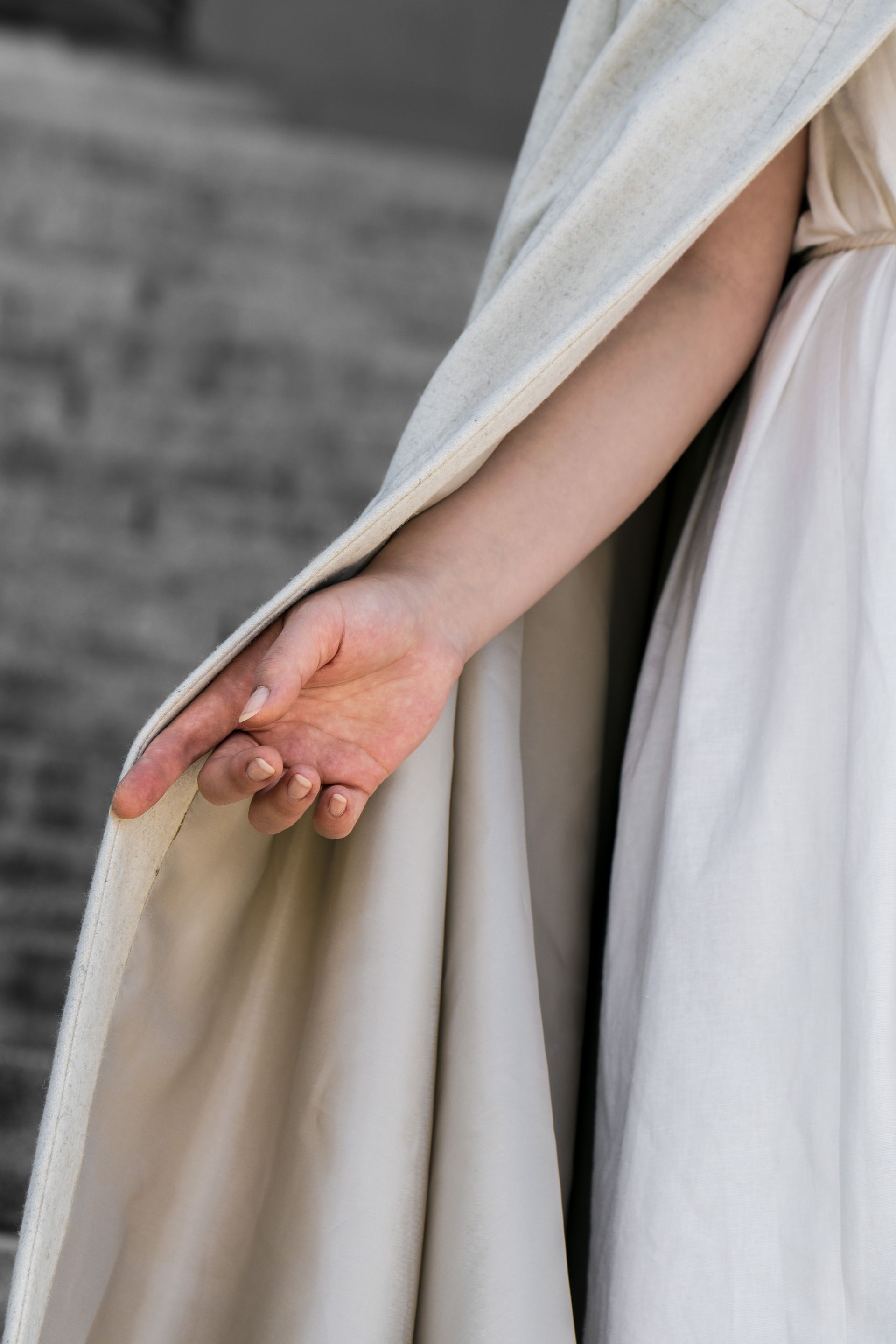
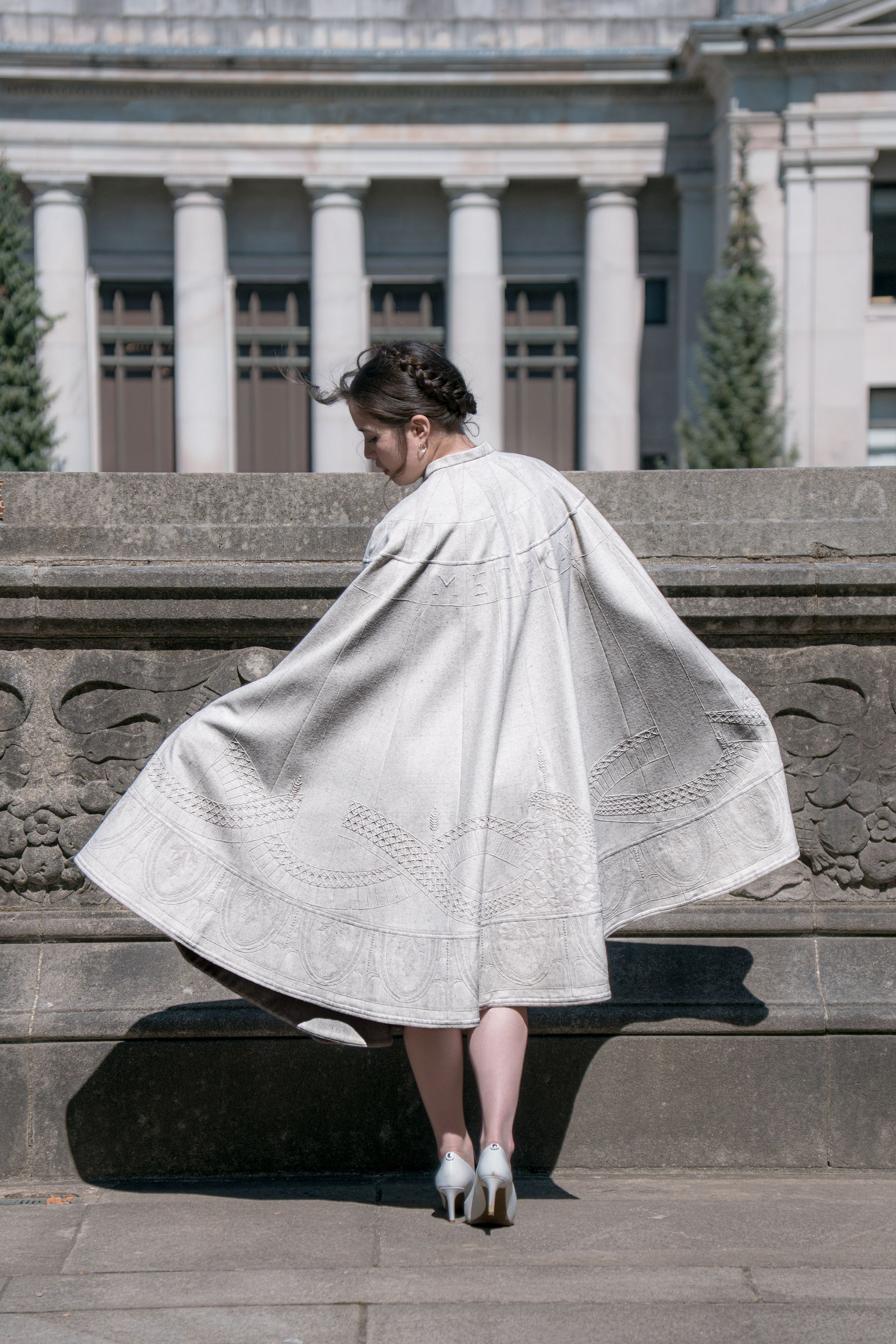


concept, research and development, & connection to the brief
The story I sought to tell was not one specific myth, but a foundational Ur-narrative of the Western/Indo-European tradition: the victory of the ordered, vertical light logos over the chaotic, chthonic dark logos— from Ahura Mazda's defeat of Angra Mainyu, to Ra's battle against Apep, to Indra's slaying of Vritra, with its purest expression being Apollo's slaying of the Python at Delphi (along with the philosophical associations of the Apollonian).
I wanted this logic embedded not only on the garment’s surface, but in its structure, observing that a cape laid flat can be read almost as a canvas. Further, the circular geometry of capes brought to mind the form of a sundial. Thus, I constructed the seams as the lines of a sundial calibrated to Delphi (Apollo’s sacred ground): a geometry visible only from above, as befits a solar principle. The material choice arose from an observation that traditional (crewel) whitework shares the tonal register of architectural bas relief, both communicating through light and shadow, raised form rather than colour.
SAMPLES AND PROCESS
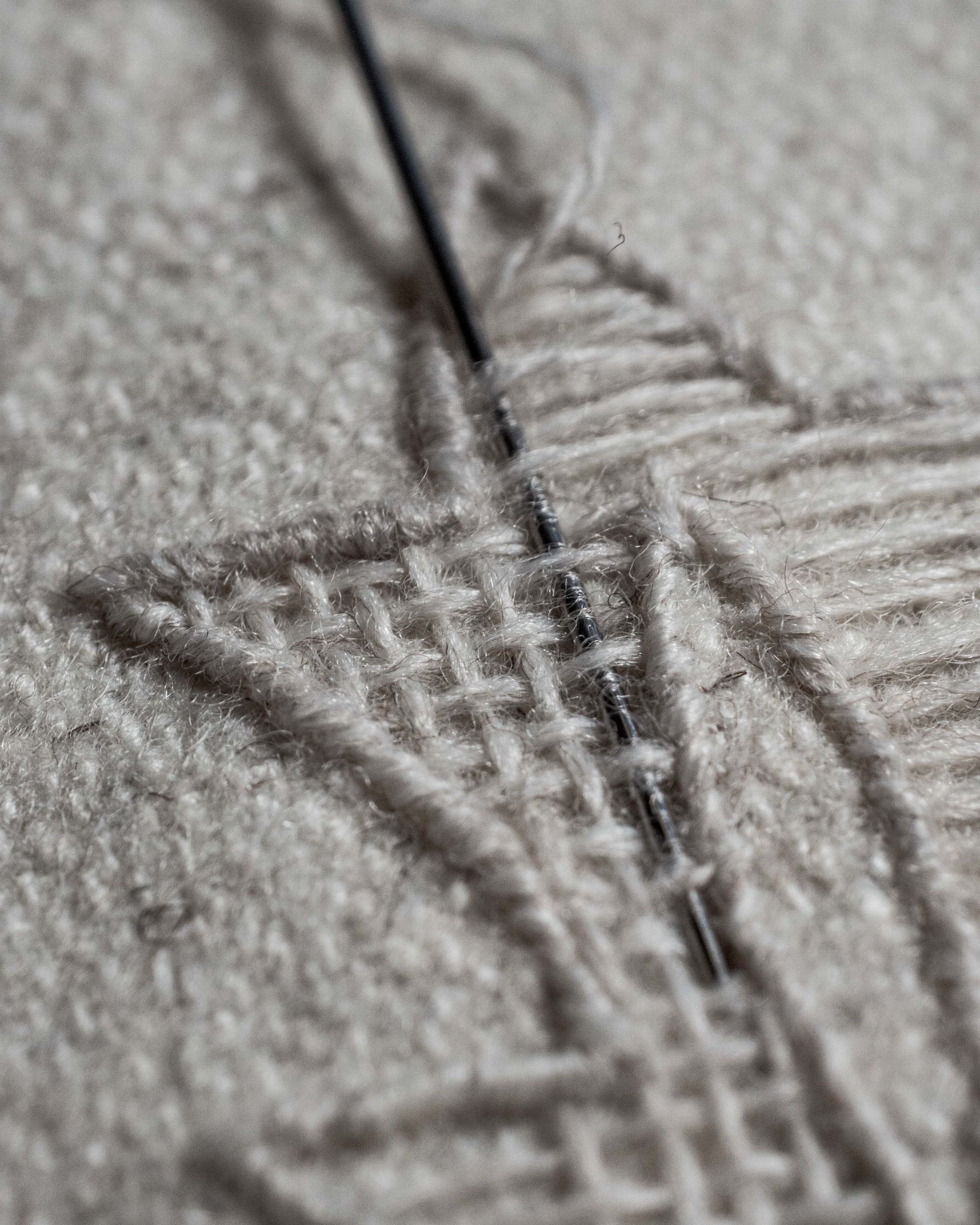
Shown is the development of two main areas: the egg-and-dart motif along the hem, and the Python coiled around the omphalos stone. During the process, I experimented with different stitches to create the bas relief effect. Using a tonal thread presented a challenge: fill stitches like satin and long-and-short darkened areas meant to be raised. I ended up using basketweave and variations thereof for recessed areas (rather than filling raised areas) as the weave sits slightly above the surface, casting shadow on the fabric. I also discovered a unique property of the melton: its fuzzy face allows stitches to be anchored using only surface fibres and moulded like clay.
The Python presented the challenge of depicting scales legibly without colour differentiation; after experimenting with techniques including fan stitch (which ended up being too flat), I settled on a net-like pattern of crossing bullion/French knots to create the rough, scaly texture of reptile skin.
Whipped backstitch proved the most effective outline, its raised ridge producing the sharp shadow lines similar to undercutting in carving (a method developed specifically to maintain legibility in monochrome sculpture).
These areas established the compositional and technical foundation from which the remaining programme developed.
DETAILS AND TECHNIQUES
A combination of an open basketweave and long and short stitch is used to create the traditional light and shadow on the spires of the compass rose, utilising an illustrative hatched/cross-hatched effect. Padded satin stitch was used on the text and the taenia (raised band), built up using thread and thin wool strips respectively; the satin stitch here evokes the smooth surface of carved stone. The letterforms used on the entablature were drawn from traditional lettering from preserved Greek inscriptions.
The solar ray motif is the primary focus of the work. The Python is pierced by the arrows not of a profane archer, but rather the solar rays themselves, each emanating from the neck's compass rose along a geometric trajectory. Apollo is not depicted because he is the solar principle. Upon the entablature is the Greek word μέτρον/ ΜΕΤΡΟΝ (“measure”), a word carrying the same dual meaning as in English— that of not only the measurement of time/space (and consequently Apollo as the geometrician god), but also in the sense of restraint and proportion, the Delphic maxim of “nothing in excess.”

The final cape operates as a unified vertical programme, read from hem to neck as an ascent from the chthonic to the solar. The lower register carries the Python coiled upon the omphalos stone wrapped in the agrenon, the egg-and-dart motif as apeiron. The middle register consists of tree-columns, following classical Doric proportions, with canopies opening as capitals under the entablature— nature ordered by measure, the sacred grove becoming temple. The upper register is the solar itself, with geometric rays forming the compass rose, a single ray extending to deliver the fatal arrow blow; the solar motif is framed by the μέτρον inscription, recalling Plato's identification of the sun with the Good as the principle by which all things become intelligible. All these show the intimate connection between solar illumination, geometry and measure, and the divine, embodied in the principle of Apollo— the cosmic architect.